




 %service-partner-advantages-list%

0.0

Kenda - Quality affordable Asian tyres

Add product to compare
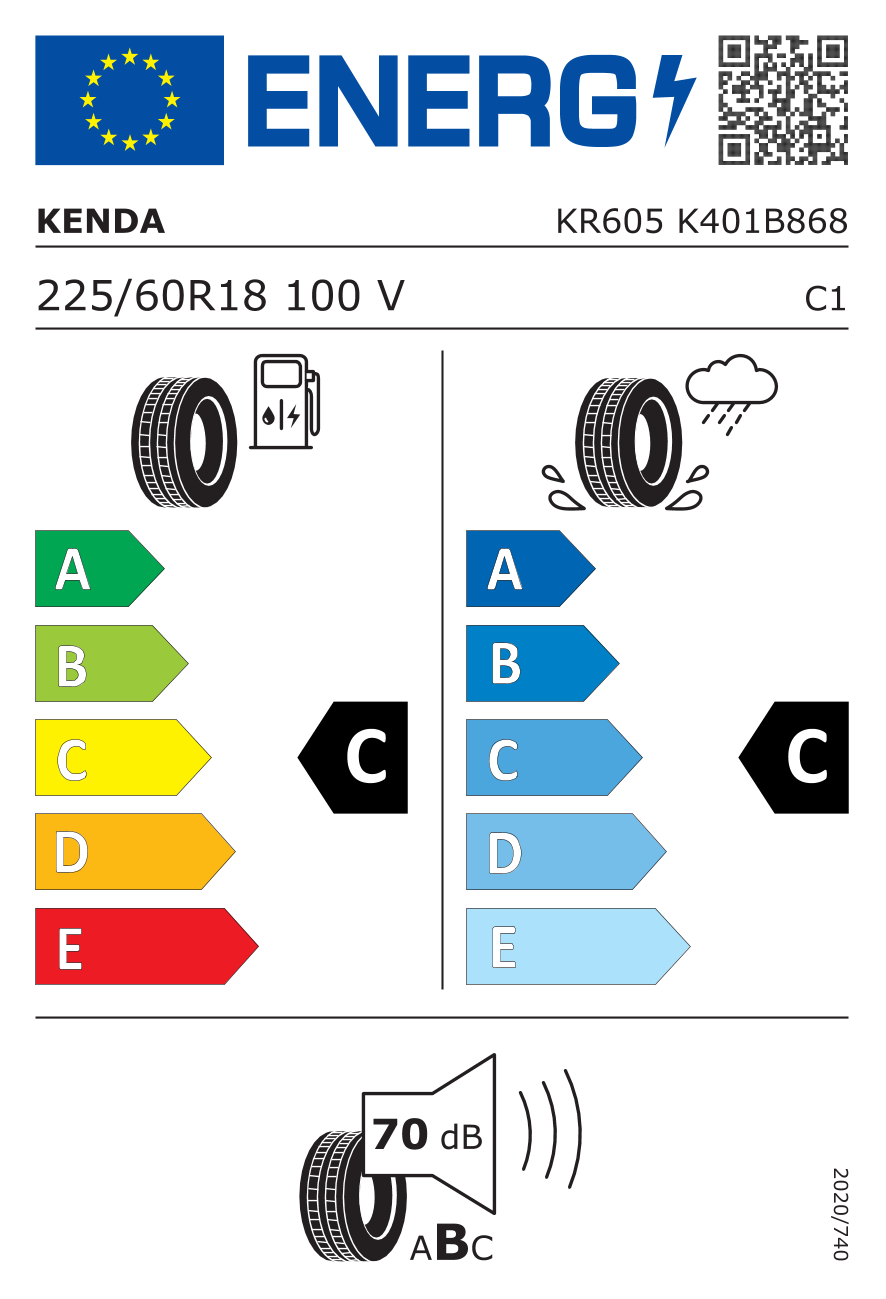
The European Union has introduced the EU Tyre Label by Regulation (No. 1222/2009) identically and bindingly for all EU member states. It applies to passenger car tyres, light commercial vehicle tyres and heavy commercial vehicle tyres produced after 01.07.2012.
Three different areas are tested: rolling resistance, wet grip and the rolling noise the tyre makes on the road.
The following are not affected by the EU Tyre Label: retreaded tyres, professional off-road tyres, racing tyres, tyres with additional devices to improve traction such as spiked tyres, T-type emergency tyres, special tyres for fitting to vehicles first registered before 1 October 1990, tyres with a maximum authorised speed of 80 km/h, tyres for rims with a nominal diameter of 254 mm or less or 635 mm or more.
With this regulation, the European Union is pursuing the goal of promoting economic and ecological efficiency in road traffic as well as increasing road safety on the one hand, and on the other hand, granting consumers more product transparency and at the same time serving as an active decision-making aid.
Already during the incorporation, experts criticise the fact that the EU Tyre Label unfortunately only shows a few product characteristics. Apart from rolling resistance, wet grip and rolling noise, which are the main focus of EU tyre labelling, tyres have much more important and safety-relevant product characteristics, such as aquaplaning properties, driving stability, service life, braking properties on dry and wet roads, behaviour in wintry conditions, etc.
Tyre manufacturers point out that test results from various institutions and journals remain an important information medium for the end consumer. These tests usually focus on further safety-relevant product characteristics besides the EU standard qualifications for tyre labelling, which are always important for the final customer.
%service-partner-advantages-list%
Quantity:%entry-quantity%
Price per unit:%entry-base-price%
Price per unit:%entry-total-price%